
How AI Is Driving Your Job Search Without You Knowing
Being rejected and ghosted? Machines decide your fate faster than you can prepare.
Summary
If you're not aware of AI being used in hiring, this article is for you.
AI-driven hiring processes scan resumes and profiles in seconds, filtering out high volumes of candidates before human review. They score based on keywords, skills gaps, or even application timing—often rejecting or ghosting you instantly if you don't match. This outpaces your tweaks or follow-ups, turning your preparation into a race against automation.
Overview
Below you'll find information about applicant tracking systems, AI-driven hiring processes, and how these tools combined are changing the hiring landscape. Here's what this article covers:
Applicant Tracking System (ATS)
An Applicant Tracking System (ATS) is an all-in-one recruiting platform focused on empowering employers to attract, evaluate, and hire top talent with speed and precision. It unifies every stage of the hiring process—job postings, applications, candidate insights, screening, and interviews—into a single streamlined workflow.
Why Companies Use ATS Software
Companies use ATS software to reduce manual work, keep hiring organized, and streamline their overall hiring process. Instead of juggling spreadsheets and email threads between hiring teams/teammates, recruiters (aka Talent Acquisition Specialists at some companies) can track each candidate's stage in the hiring process. They can share notes on candidates with hiring managers, bulk screen applicants (sort, rank, reject, filter, etc.), and monitor hiring metrics (time-to-hire, recruiter productivity, and cost-per-hire, etc.). To name a few companies using AI: Greenhouse, Lever, Ashby, Workable, Workday. There's also Juicebox (an AI recruiting platform) that connects to ATS platforms. Simply put, ATS platforms can use Juicebox to power their AI-driven hiring processes instead of building their own AI software. As of today, their docs state they can connect to the following platforms:
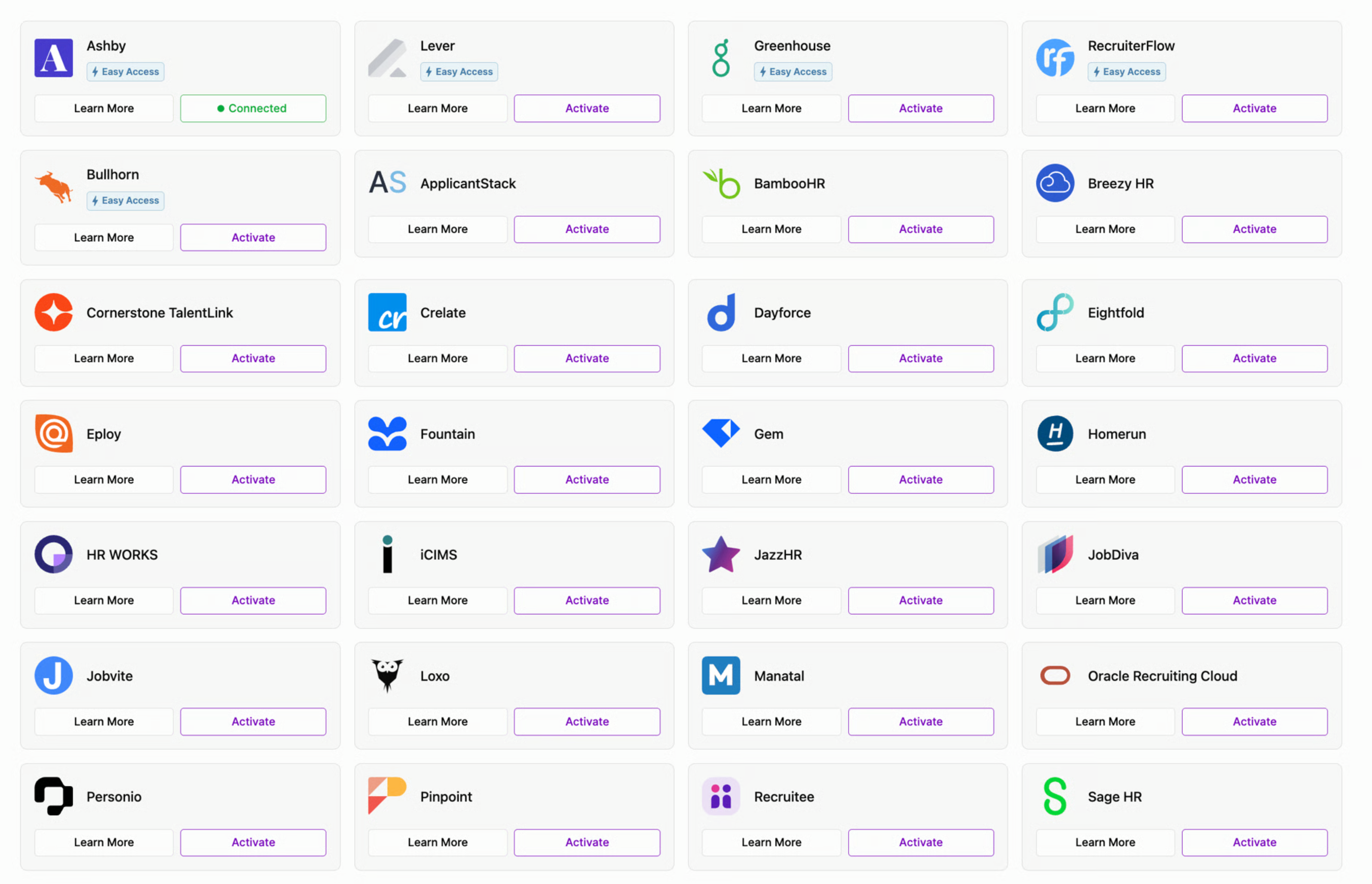 Juicebox AI's current list of integrations (as of April 12, 2026)
How This Affects You
For you, an ATS matters because it can scan your resume for keywords and structured information before your resume and application are seen by a human. That means your role as a job seeker should include the ability to tailor your resumes to their respective job descriptions/applications. Not doing so could result in immediate rejection from an ATS, and you might get rejected without an email (aka being ghosted—see the Ashby screenshot below showing the "Reject without Email" feature).
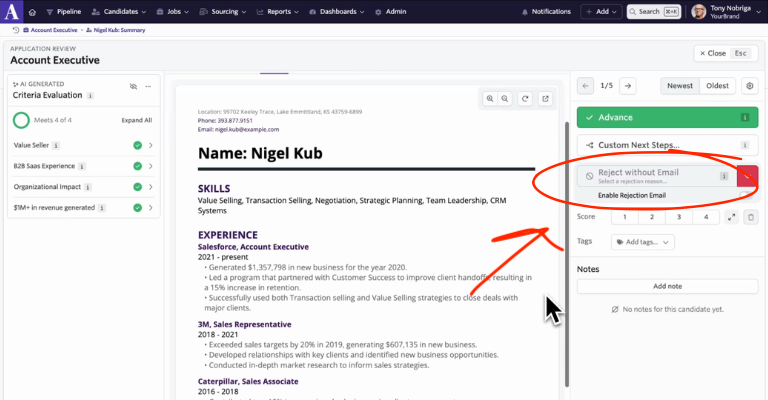 Ashby's "Reject without Email" feature
AI + ATS
Old-style ATS mostly scanned resumes for exact keywords and basic formatting, so "beating the system" meant tweaking buzzwords and bullet points. Modern AI-powered ATS uses natural-language processing and machine learning to understand context, skills mapping, and experience depth, which means the same resume can be ranked very differently across systems (different AI models will generate different results and you won't know what models are being used by an ATS).
AI enables an ATS to auto-screen thousands of applications, filter candidates, rank candidates, and route only the "top" matches to recruiters. This speeds up the hiring process on their side, but for job seekers, this means more rejections and ghosting. Not because they're not qualified, but because their resumes weren't tailored and ultimately didn't meet the AI-driven system's criteria.
AI + ATS Real World Examples
Candidate Grading
Take the following screenshot from Workday. They state they prioritize top talent with unbiased AI-driven candidate grading, but different AI models will generate different results. So which model is correct when it comes to deciding "top talent" in AI-driven candidate grading? This seems biased to me since AI models can generate different results for the same resume.
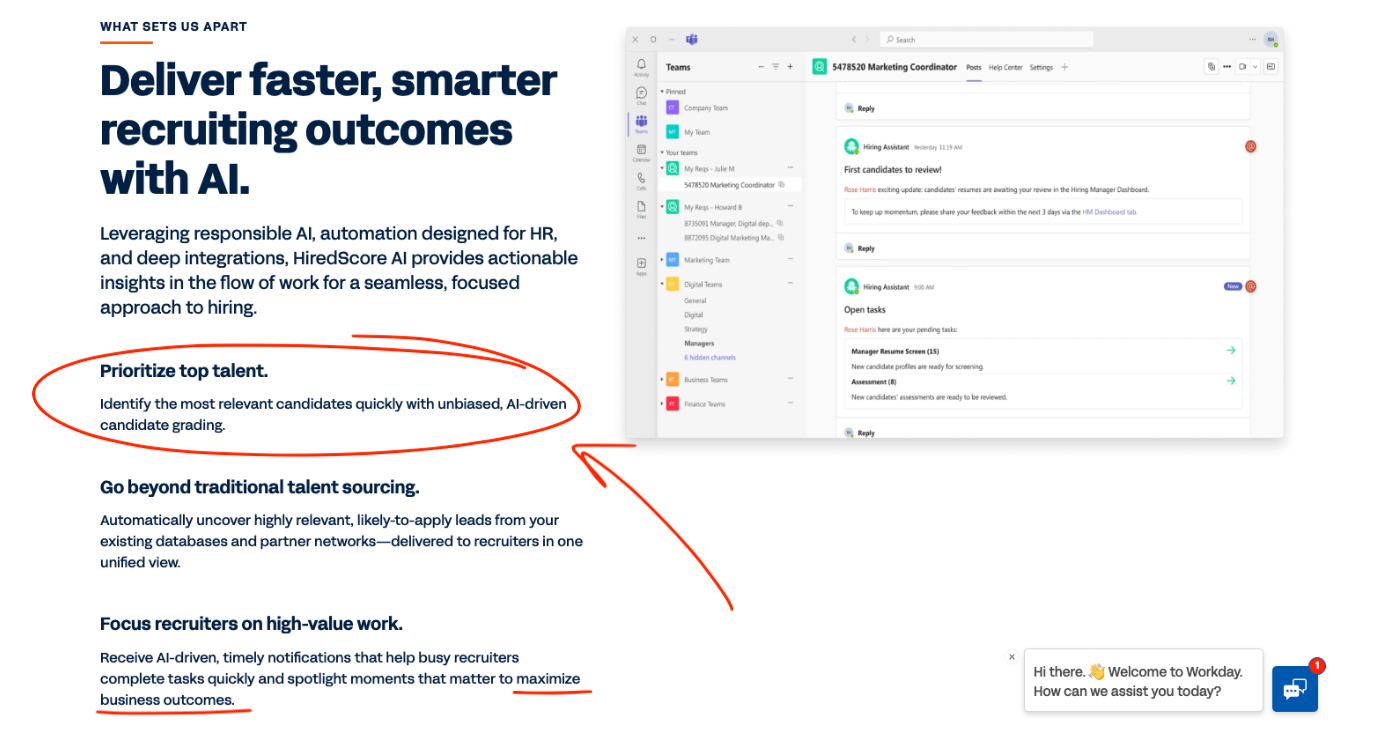 Workday's focus: [...] providing unbiased, AI-driven candidate grading
Candidate Filtering
As I mentioned before, job seekers are probably really good at the jobs they're applying for, but they suck at writing resumes, so they get filtered out by the ATS. Here's a screenshot from Juicebox AI showing how they calibrate for hiring goals—focused on fast talent pool slicing.
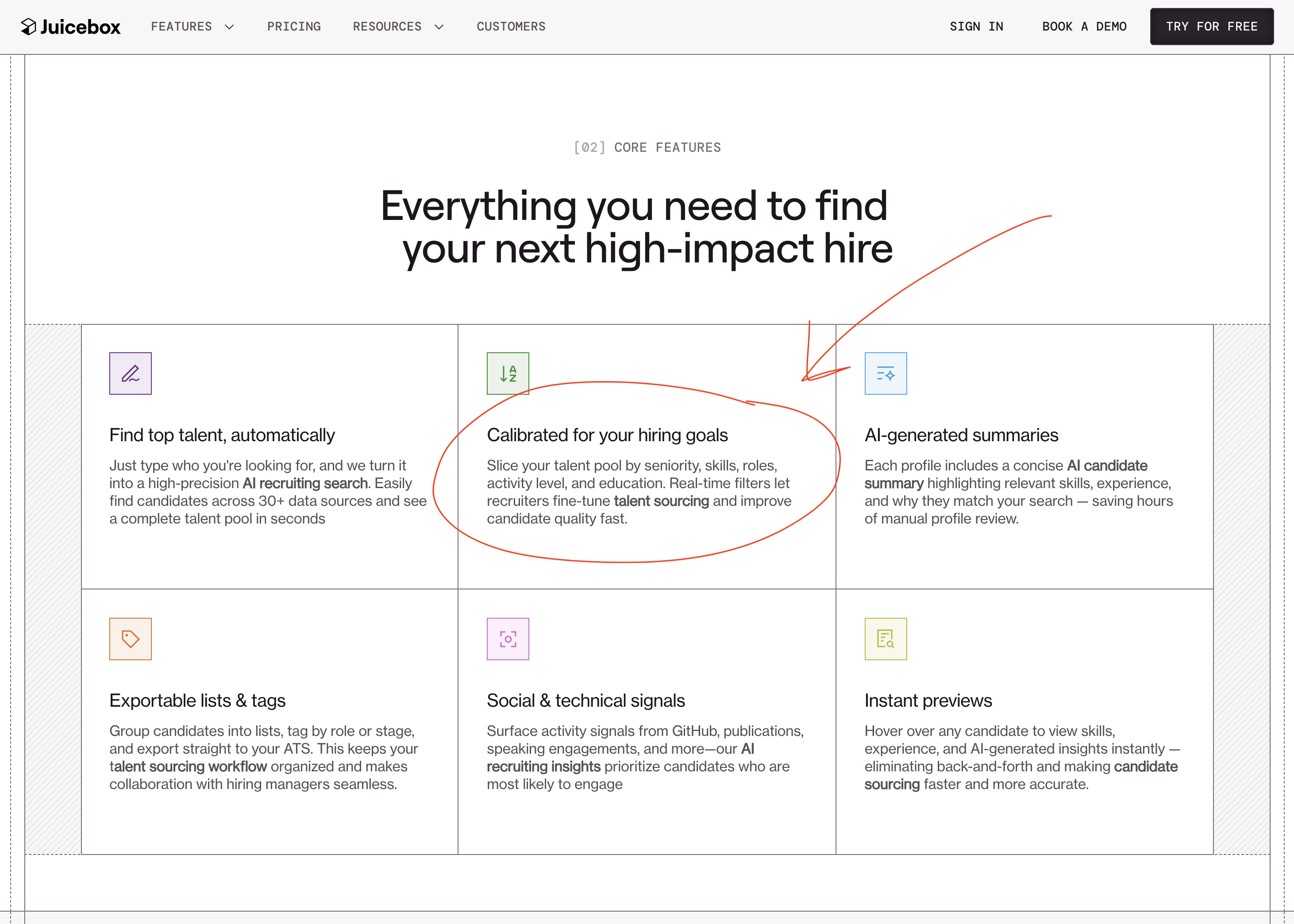 Juicebox AI's filtering feature description
Here's a testimonial on filtering from Juicebox AI:
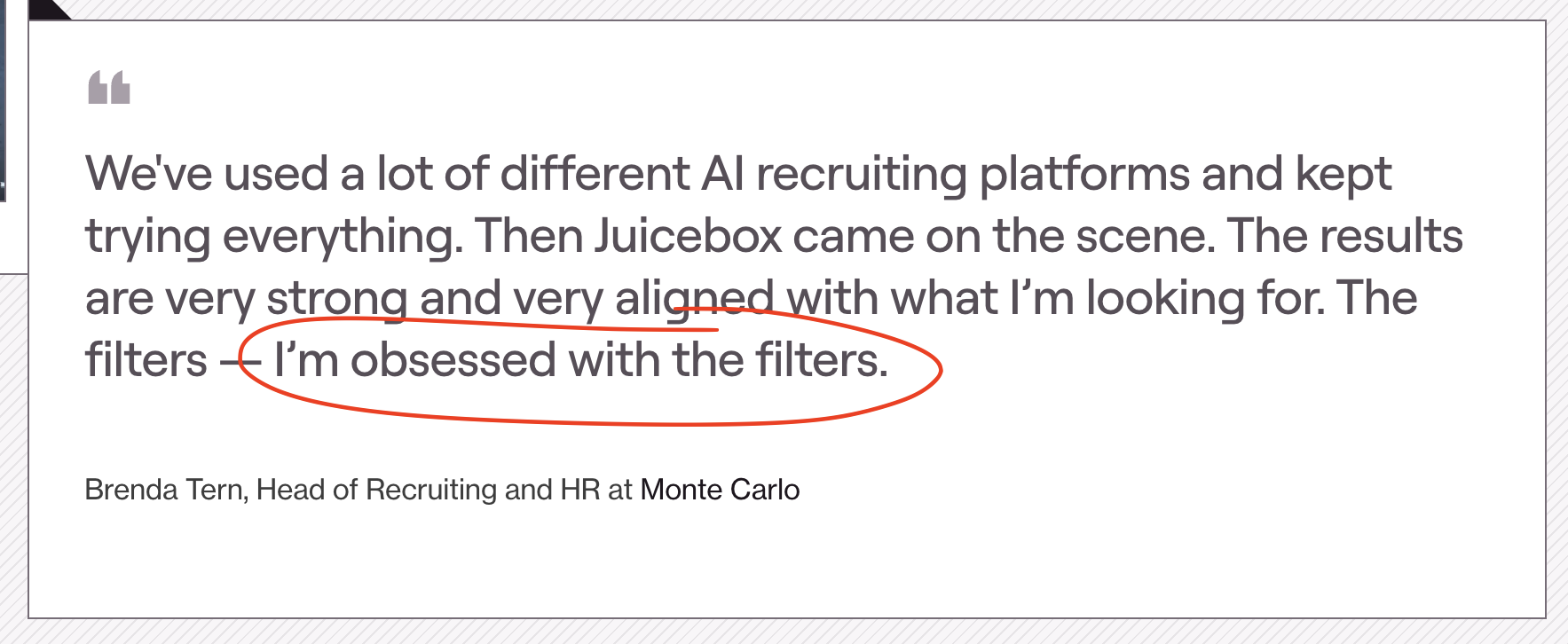 Juicebox AI testimonial on filtering
Granted, this is just one person. Also, recruiters using AI for candidate filtering could verify its accuracy by reviewing the AI's decision-making, but I like to question how often that happens when a recruiter has a high volume of applicants per job posting.
Outreach Emails
Here's a clip on Workable's "personalized" outreach email.
Notice the "Generate with AI" button? In my opinion, an outreach email generated by AI is not personalized. It's a generic template at best. The only difference is it was written by AI, not a person. Some can argue that AI writes it and the person proofreads it. That's fine, but I like to question (again) how often that happens when a there's a high volume of applicants per job posting.
My Thoughts
The Battlefield We Face
It sucks the hiring process has come to this. It's basically an AI vs. AI battlefield now. Recruiters are using AI to speed up their workflow and candidates are using AI to pass the initial screening process.
In my opinion, ATS software can be categorized as result-driven software—meaning the deliverables (measurable business outcomes) are most important in the hiring process. Some can argue that this should be most important. I don't disagree if that's the overall goal for a company—finding people, or "resources" as they see them, to do tasks on a repeating Mon-Fri 9-5 schedule. In this case, the result-driven aspect of the ATS makes sense. If that's not the goal (because people including myself believe in work-life balance), then I think human-to-human interaction is most important in the hiring process, not human-to-algorithm interaction. I say this because an ATS algorithm can decide you won't produce positive business outcomes based on how you wrote your resume. In this case, you'd probably be really good at the job, but you suck at writing resumes, so you get filtered out by the ATS with/without a rejection letter (being ghosted suuuucks).
For you, an AI-driven ATS can make you feel like you're shouting into a black box as loud as you can—hoping your voice is heard outside that box by the person or people creating the rules for it. You tailor your resume, apply endlessly, and are often ghosted. Meanwhile, hiring teams swear they're "finding more qualified candidates faster" by using AI-driven hiring processes. In my opinion, AI is constantly reshaping the hiring landscape in silence—dictating who gets careers (not just who gets interviews), how recruiters should use the system, and the measurable business outcomes; and now we need AI to assist us in our job search.
AI vs. AI
I know there are options out there like Resume Matcher, CVnomist, Jobscan, and others mentioned in Reddit - r/ResumesATS for this AI vs. AI job search battle. Seems like there are success stories around these platforms/tools. Personally, they don't fit my needs. They're too bloated and manual for me. They might fit yours though, which is why I mention them here.
For me, having this knowledge is pushing me to build my own software to use AI against AI. I don't care about AI in the ATS part of the job search. I care about meeting the person or people sitting outside that black box. If I have to use AI to get me to meet someone real, then I will use AI. I want to automate most of my job search process with it:
- Find job applications that align with my resumes
- Find job applications that could align with my resumes
- Track/reconcile job applications (e.g., if a job application page is removed, then it will be flagged and I'll be notified to reconcile it)
- Tailor my resumes to job descriptions and notify me for proofreading and further tailoring
It's been refreshing to code something like this—building a platform that's truly useful and eases the frustration of job searching. Here's a screenshot of the working prototype as of April 8, 2026.
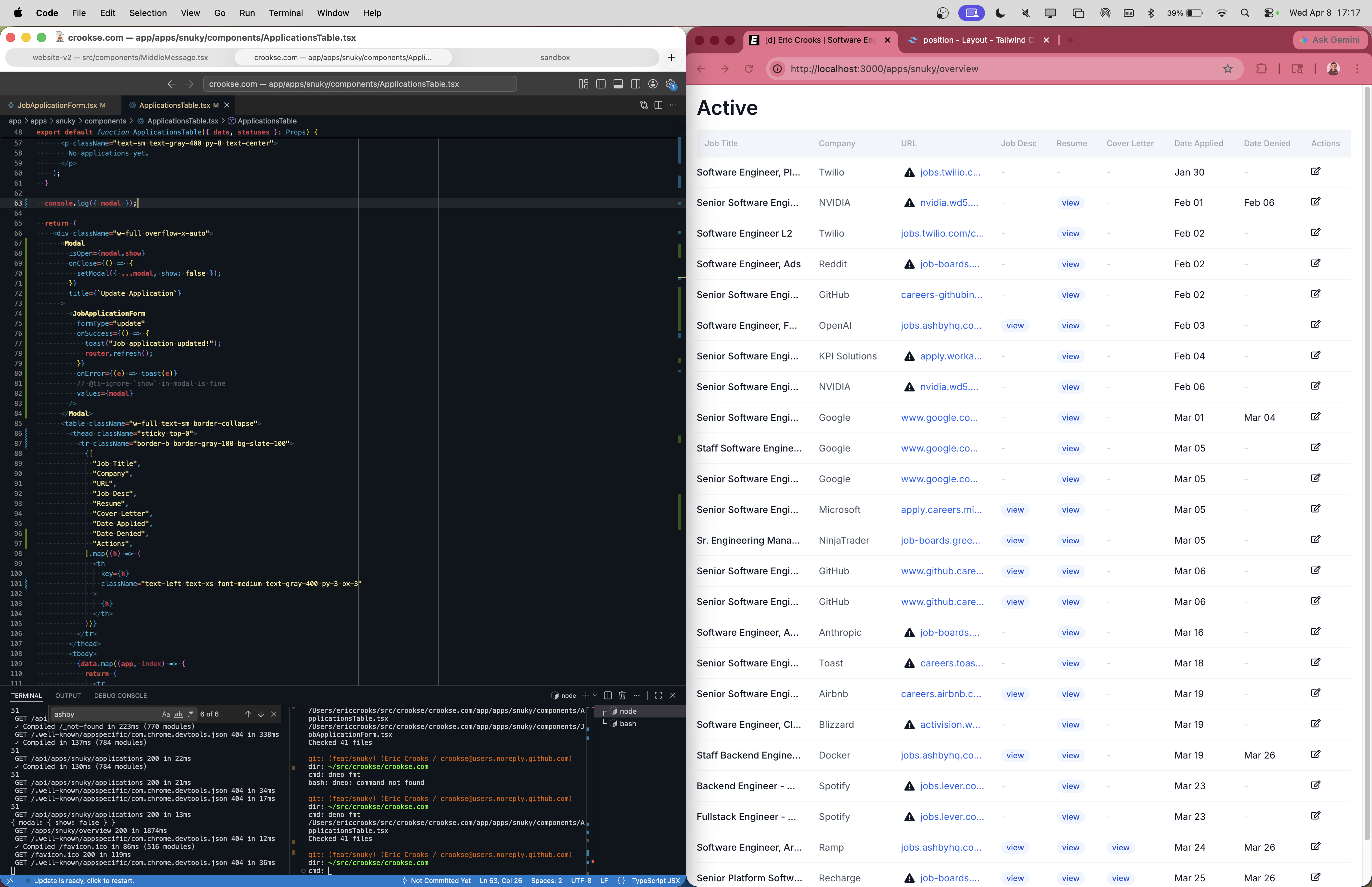 Automating job searches, resume tailoring, and application tracking
When I'm done with this, I won't get "here's a list of jobs you might like" emails. Those will be replaced with "here are your resumes you need to review for these jobs" emails and I hope to have emails reoccuring daily.
DYOR
Seriously. Do your own research (DYOR). Don't take my word for for all of this. Question everything, including me. I'm just a software engineer sharing my point of view from my article. Some pointers:
- Question which companies are using AI for their ATS screening/processes
- Question the common pitfalls when using AI ATS screening
- Question how you can prepare for an AI-driven hiring landscape
Learn as much as you can about AI and ATSs. The more you understand them, the better prepared you'll be in your job search. Best of luck—I hope you get matched with great opportunities.
Sources
- Greenhouse - AI Recruiting Software | Recruitment and AI Talent Acquisition Tools
- Greenhouse - What is an applicant tracking system (ATS)?
- Workday - What is an Applicant Tracking System?
- BambooHR - Applicant Tracking System (ATS)
- SAP - What is an Applicant Tracking System (ATS)?
- CSUF - Applicant Tracking Systems: What Job-Seekers Should Know | College of Business and Economics at CSUF
- Perplexity AI